Hidden Costs of Outsourced Printing and What Drives the Price
10th Nov 2026
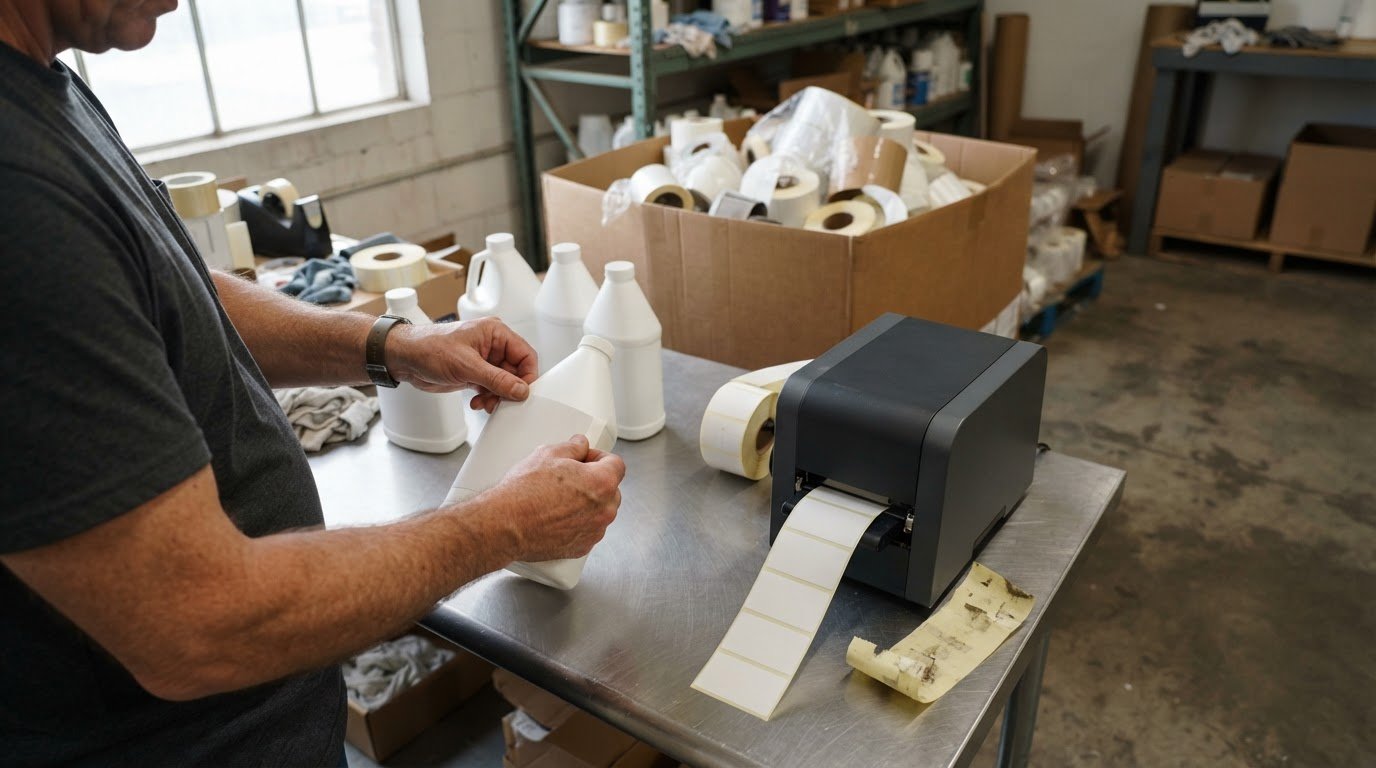
Outsourcing printing can make an invoice look simple while leaving important costs out of view. The hidden costs of outsourced printing may include rush shipping, revisions, job setup, and staff time spent coordinating orders. A fair comparison also counts what in-house printing requires, from equipment and supplies to maintenance and employee time.
It’s easy to focus on the quoted price per job. But the lowest visible cost may not reflect the full budget impact, especially when print needs change or deadlines tighten. Comparing both options side by side gives you a clearer view of where money and time go.
This article explains which outsourced expenses can be overlooked, how they compare with the ongoing costs of printing in-house, and what to track for better budget control. Print volume, job complexity, turnaround needs, and internal workloads all affect the decision.
Key Takeaways
- Build a complete print budget by tracking job charges alongside internal coordination time, shipping, and reprints.
- Compare outsourcing with in-house production over the same period, including equipment, staffing, supplies, space, and maintenance.
- Clarify how setup, proofing, and plate charges apply to each job, since these costs can vary with the print method and project requirements.
- Assess print quality, communication, scheduling, and data security as well as the quoted price when evaluating a printing partner.
- Use print volume, turnaround needs, and job complexity to identify which approach may give your business better budget control.
Printing cost transparency and budget control
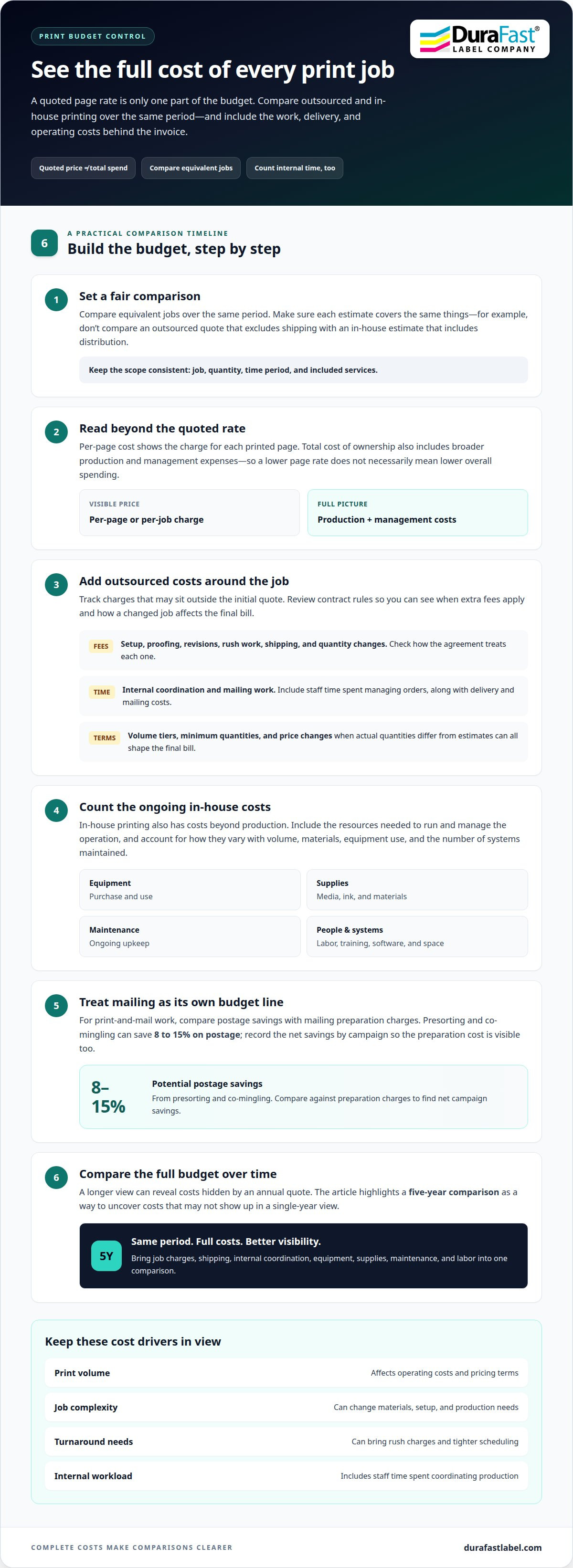
A useful print budget counts the full cost of each job, not just its quoted page rate. The hidden costs of outsourced printing can include delivery, internal labor, and mailing. Compare both options over the same period to see how these expenses affect spending.
Comparing Per-Page and Ownership Costs
Per-page cost measures the charge for each printed page, while total cost of ownership includes broader production and management expenses. This distinction matters because a lower page rate does not necessarily mean lower overall spending.
Compare equivalent jobs, then include equipment, supplies, maintenance, labor, and delivery.
A five-year comparison can reveal costs hidden by an annual quote.
Shipping, Delivery, and Rush Fees
Shipping, delivery, and rush fees add costs beyond the print quote. They matter when deadlines require faster production or separate deliveries increase fulfillment needs.
Track these charges alongside print invoices to see their effect on your budget. Planning earlier or consolidating deliveries may reduce avoidable rush requests and clarify the actual cost per completed job.
Compare estimates on equal terms. Don’t compare a quote that excludes shipping with an in-house estimate that includes distribution. Record what each estimate covers before judging potential savings.
Contract Terms and Pricing Rules
Contract terms define what a quoted charge covers and when extra charges apply. Clear pricing rules help prevent unexpected expenses when jobs change.
Review how the agreement handles setup, proofing, revisions, rush work, shipping, and quantity changes. A proof revision or late request may be billed differently from the original job. Include each rule in your budget so additional charges stay visible.
Note volume tiers, minimum quantities, and price changes when actual quantities differ from estimates. These terms shape the final bill, even when the initial quote seems predictable. Tracking hidden costs of outsourced printing against agreed pricing rules makes invoice reviews more useful.
Print and mail costs need separate attention. Presorting and co-mingling can save 8 to 15% on postage, so include mailing preparation in campaign estimates. Compare postage savings with preparation charges, then record net savings by campaign. This gives the next budget cycle a clearer view of printing and mailing expenses.
Choosing a reliable printing partner
A reliable printing partner protects quality, timing, and workflow, not just the quoted price. Poor print quality, for example, can require rework and cause missed delivery deadlines. Evaluate how a provider handles specifications, proofs, production updates, and corrections before assigning work. These factors help show whether its services can support your schedule efficiently.
Check quality before a full production run. Agree on details such as dimensions, materials, color expectations, and finishing, then review a proof against those requirements. Accurate color matching and consistent output matter when printed materials represent a brand across multiple orders. A sample that differs from the approved proof can lead to waste, replacement work, and delays.
What quality, reprint, and deadline risks can create additional printing expenses? Poor quality may require reprints, while late production can disrupt launches, customer communications, or event schedules. Vendor production schedules may add 2-5 days of delay to outsourced print projects, so include production time and delivery time in the plan.
Use these practical checks to assess a partner’s workflow:
- Confirm how the provider receives final artwork and production specifications.
- Establish who reviews proofs and how approval changes the production schedule.
- Ask how the provider communicates job progress and handles a quality issue.
- Match delivery timing to the date materials must be ready for use.
Communication helps control costs. If progress updates arrive late, your team may have less time to respond to production problems. Regular job-status updates make handoffs easier to manage. For example, a scheduled update before production and another before dispatch can help teams coordinate receiving and distribution.
Consider resilience, too. Nationwide production facilities can help outsourced providers maintain service when local disruptions affect in-house operations. Overseas shipments may face customs issues, port congestion, or other logistics delays. Distance can also make it harder to inspect materials before shipment or resolve quality concerns quickly across language and time-zone differences.
Security deserves attention when print jobs contain sensitive information. Traditional print environments can expose data or networks if jobs are not encrypted, devices are not updated, or printers have vulnerabilities. Include secure file handling, access controls, and clear data responsibilities in your partner evaluation. These safeguards can reduce avoidable exposure while keeping the workflow practical.
For label workflows, choosing suitable equipment can also help keep production closer to daily operations. If you’re assessing how label printing equipment fits your process, discuss your label-printing workflow.
Consumables, software, and maintenance costs
Consumables and print infrastructure can add ongoing costs beyond the production charge. For in-house printing, include media, ink, maintenance, software, staff time, and training in the operating budget. These expenses vary with print volume, material choices, equipment use, and the number of systems the organization maintains.
Paper upgrades, ink choices, and finishing options increase costs when a job needs more materials or production steps. Heavier or specialty paper uses different stock from standard paper, while a particular ink or color treatment may require specific supplies. Binding, folding, coating, and trimming add handling. Compare the finished item, not just the basic sheet, when reviewing a quote.
Lower-quality paper and inks are more susceptible to fading, yellowing, and tearing than higher-quality materials. A cheaper supply can therefore create waste if the finished print does not meet its intended use. For example, a document handled frequently may need more durable material than an internal draft. Match material quality to the job’s purpose.
What extra costs can arise from file correction, prepress, or color matching? Artwork with missing fonts, incorrect dimensions, or image issues may need correction before production. Color matching can also involve proof review and adjustments, adding labor or another production step.
Software costs can include licensing, upgrades, and the infrastructure needed to manage print jobs. Traditional print environments may require print-spooling servers, operating-system and security-software licenses, redundancy mechanisms, and VPN connections for individual locations. Organizations using non-Windows devices or platforms may also need integration solutions. Each added component requires staff attention to manage the print environment.
Maintenance involves more than fixing a device. Staff may need to update software, manage print queues, maintain servers, and resolve user issues. Outdated printing hardware or software can create technical limitations that take employee time to address. Cloud printing can remove the need for print-server maintenance and related infrastructure costs, while print management tools can show usage, devices, users, costs, and printing habits.
Use a simple review to make recurring expenses visible:
- Separate paper, ink, and finishing materials by job type.
- Record software licenses, server needs, and platform integrations.
- Track maintenance tasks, staff time, and recurring equipment issues.
- Set double-sided, black-and-white printing as the default for everyday documents.
These steps help distinguish necessary production costs from avoidable consumption. For example, setting routine documents to print double-sided in black and white can reduce unnecessary use of paper and color supplies. Review actual usage alongside maintenance and software needs to identify where managing the print setup may improve budget control.
In-house versus outsourced printing costs
The choice depends on print volume, job consistency, and the investment needed to run production. In-house printing keeps equipment and staffing costs within the organization, while outsourcing shifts more spending to individual jobs. Compare both models over the same period, including unused capacity, employee time, and workflow demands.
Volume can change the financial balance. That threshold is a starting point for analysis, not an automatic decision. Frequent, predictable jobs can keep equipment in use, while irregular demand may leave an expensive press idle.
Scale also changes the potential benefit. That example shows why annual volume matters, but the calculation must also account for supplies, staff, service, and production capacity.
In-house operations can lose value through waste and unused resources. Organizations waste 10 to 15% of what they print, with waste potentially higher for large batch runs of frequently changing materials. A department that updates brochures often may discard obsolete stock. Smaller, more frequent production runs can limit that risk, though they may change unit economics.
Space and labor matter, too. Employee costs also exceed base salary: fully loaded employee cost is typically 1.25 to 1.4 times base salary. Include print-room space and staff allocation when calculating an in-house investment.
Outsourcing can shift printing expenses from fixed overhead to variable costs. That may suit departments with fluctuating needs, seasonal campaigns, or specialized jobs. However, relying on external schedules may complicate urgent workflow changes. In-house capacity offers more direct control over timing, but equipment or software may struggle with large quantities, fast turnarounds, variable data, or customized jobs.
Use these factors to frame the comparison:
- Estimate annual volume by job type and note seasonal peaks.
- Count staff time spent on production and printer administration.
- Include space, supplies, maintenance, and equipment utilization.
- Identify jobs requiring fast turnaround, variable data, or customization.
The practical takeaway is to match the model to the workload. Stable, high-volume production may support an in-house investment, while changing demand may favor variable-cost outsourcing. A hybrid workflow can keep routine jobs internal while sending specialized or capacity-heavy work outside. Choose based on total requirements, not a single page rate.
What are typical setup, proofing, and plate fees for outsourced printing?
Setup, proofing, and plate charges are job-preparation costs, not standard fees across all print projects. Their amount depends on the production method, artwork condition, proof requirements, and whether plates are needed. A quote is easier to budget when each preparation task is listed separately from printing, finishing, and delivery.
Setup covers the work needed to prepare a job for production. This can include checking supplied files, arranging artwork, configuring the job, and preparing equipment. A repeat order with unchanged artwork may need less preparation than a new design with revised dimensions or multiple versions. Changes after approval can trigger additional prepress work, so specify which file version is ready for production.
Proofing gives the buyer a chance to review a sample or digital representation before the full run. The cost depends on the proof format and review process. A digital proof can show layout and content, while a physical proof provides a tangible view of the printed output. Additional rounds can add work, especially when corrections arrive in separate batches. Consolidate edits before approval to reduce avoidable revisions.
Plate fees apply when the chosen printing process requires physical plates. Each distinct design or color setup can affect preparation, and artwork changes may require replacement plates. Digital printing generally uses a different production setup, so physical plate charges do not apply in the same way. The production method determines whether this line item appears.
Look for these details in an itemized estimate:
- File preparation, artwork correction, and layout adjustments.
- Proof format, included review rounds, and charges for further revisions.
- Plate preparation, plate replacement, and the designs covered.
- Whether setup is charged once or repeated for separate versions or runs.
For example, a campaign with several regional versions may need separate file checks and proofs, even when the main design stays consistent. An unchanged reprint of a single approved version can involve different preparation needs. Keep the estimate, approved proof, and final artwork together. This record helps explain later charges and makes repeat orders easier to scope.
Compare estimates using the same artwork, quantity, process, proof type, and finishing requirements. A lower setup charge can be offset by more revision fees, while a higher preparation charge may include more prepress work. Review how each estimate treats changes after approval and what triggers another setup.
For help matching label production needs with suitable equipment and materials, discuss your printing requirements.
These charges sit within a broader print budget: businesses typically spend 1 to 3% of annual revenue on print-related activities. Outsourced printing is described as typically reducing total spend by 20%+. Credit unions typically reduce print and mail costs by at least 20%, although the result depends on the operation and its requirements. A full production transition to outsourced printing typically takes 8 to 12 weeks from initial assessment. The discovery and assessment phase typically takes 2 to 4 weeks, followed by a solution design phase of 1 to 2 weeks. Allowing for that timeline helps teams plan approvals and maintain continuity during the change.
DuraFast Label Company
DuraFast Label Company offers label printers and supplies for businesses assessing in-house label production. The right setup depends on label volume, material needs, and how often designs change. For example, the Epson ColorWorks C6000A and similar industrial systems can support color label workflows, while the Zebra ZT411 Thermal Transfer Printer suits thermal transfer label production. DuraFast Matte Chemical Labels are another option for businesses reviewing label materials alongside equipment.
DuraFast Label Company offers label printers and supplies to help businesses assess the equipment and consumables involved in printing labels in-house. These products are one part of the comparison, alongside outsourced job costs, delivery charges, and staff time. If you’re considering label-printing equipment or supplies for your workflow, contact DuraFast Label Company to discuss your needs.
Make Your Next Print Decision With Confidence
Make print spending part of regular planning, not a surprise at renewal time. Assign someone to review print requirements as products, packaging, and workflows change. This creates a useful checkpoint before committing to new equipment or another production approach. The hidden costs of outsourced printing are easier to manage when decisions reflect current needs, rather than assumptions carried forward from an older budget.
For label production, consider how your team’s materials and printing requirements fit together. DuraFast Label Company offers label printers and supplies to help businesses assess in-house label printing as part of that decision. Choose a next step that suits your operation, whether you’re evaluating label equipment or refining your print budget.
Contact DuraFast Label Company to discuss your label-printing needs. A clearer plan can help your next printing decision feel more manageable.
Frequently Asked Questions
How do direct printing costs differ from indirect printing costs?
Direct costs are tied to producing a specific print job, while indirect costs support the surrounding workflow. Paper, ink, and finishing are direct costs. Staff time spent organizing files, distributing materials, or resolving a print queue issue is indirect. For instance, a marketing coordinator handling a delayed shipment may spend time away from campaign work. Track both categories to understand the wider operational impact.
What hidden fees do commercial printing companies charge?
Possible additional charges include file correction, extra proof rounds, plate preparation for applicable processes, rush production, and separate deliveries. Not every job incurs each charge. A project with several artwork versions, for example, may need separate preparation or review. Read the estimate alongside its scope and note which changes could alter the final invoice. This makes it easier to distinguish job requirements from added work.
How do outsourced printing costs compare with in-house printing costs?
Outsourcing usually ties spending to orders, while in-house printing requires an ongoing operating setup. A business with uneven demand may value outsourcing’s flexibility; one with steady, repeatable jobs may benefit from keeping some production internal. A hybrid approach can separate routine documents from specialized or unusually large projects. Compare the options against actual workflow needs, including who handles preparation, production, and distribution.
How can businesses calculate the total cost of outsourced printing?
Choose a consistent budget period, then total invoices for production, shipping, mailing, revisions, and reprints. Add internal time spent preparing files, approving proofs, coordinating deliveries, and handling exceptions. Divide that total by the usable pieces received, rather than the quantity ordered, to estimate the effective cost per usable piece. Keep separate records by job type so recurring work can be compared fairly across budget periods.