Stop Outsourcing Label Printing: Debunking Myths and Finding Your 2026 ROI
27th Jun 2026
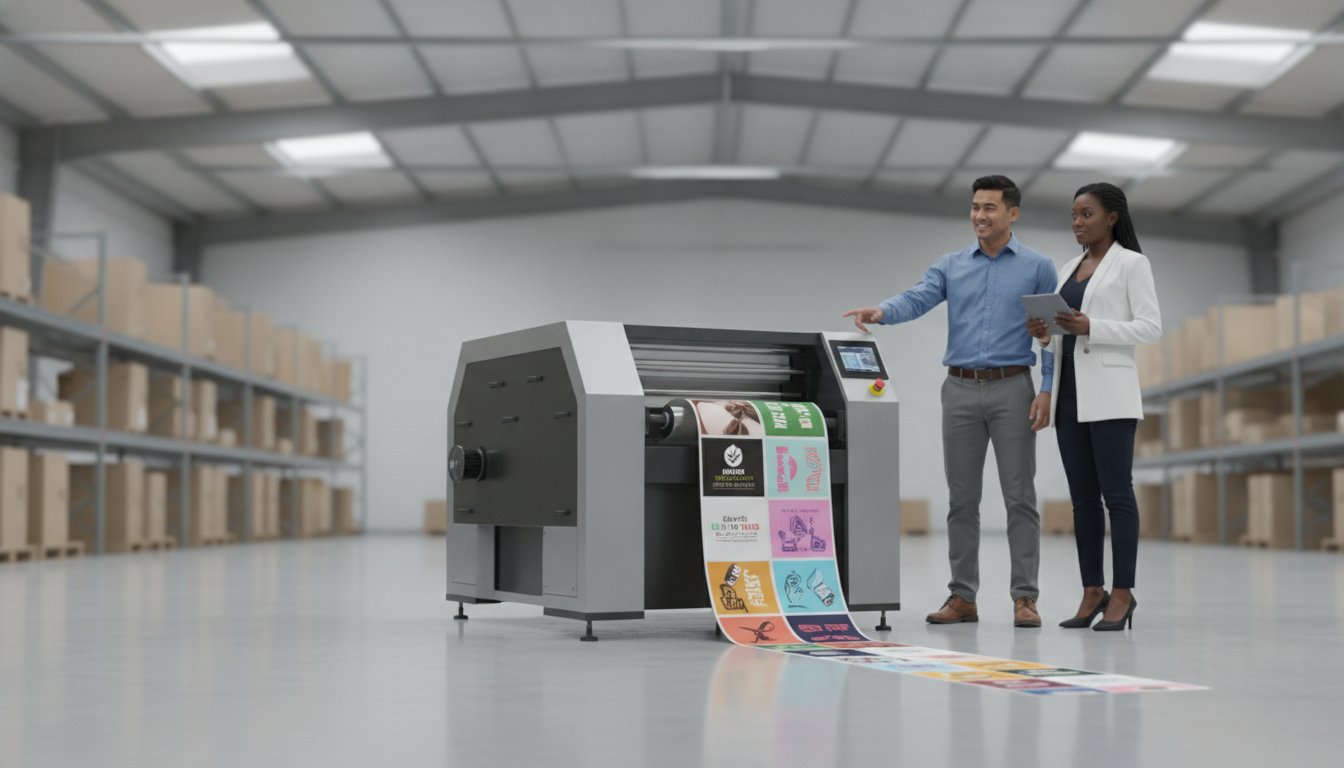
What if the "convenience" of your label supplier is actually the biggest bottleneck in your supply chain? It's easy to feel like letting someone else handle the printing saves you time. However, you've likely dealt with high minimum order quantities and frustrating weeks of lead time just to get a simple design update onto your products. These delays aren't just annoying; they're a tax on your business agility.
To truly reclaim your schedule and your budget, you need to stop outsourcing label printing and look at the hidden costs of those third-party dependencies. With 2026 requirements like the updated Amazon FBA barcode deadlines and new EU packaging regulations already in play, waiting for a print shop is no longer a viable strategy. You need a solution that moves as fast as your customers do.
This guide will show you exactly how to take back control. We'll debunk the common myths about in-house complexity and identify the massive ROI potential waiting for your business. You'll learn how same-day label updates and lower costs per print can transform your inventory management from a logistical headache into a major competitive advantage.
Key Takeaways
- Uncover the hidden costs behind "cheap" print shop quotes, including the financial drain of high minimum order quantities and shipping fees.
- Identify your break-even volume to determine the exact moment your business should stop outsourcing label printing to maximize long-term ROI.
- See how modern 1200 dpi digital printers provide professional-grade results that match or exceed traditional commercial print quality.
- Learn to select the right hardware by weighing the benefits of high-speed Memjet technology against the chemical resistance of pigment inkjet systems.
- Reclaim your supply chain agility by eliminating weeks of lead time and gaining the power to print same-day design updates in-house.
The Myth of the "Cheap" Outsourced Label
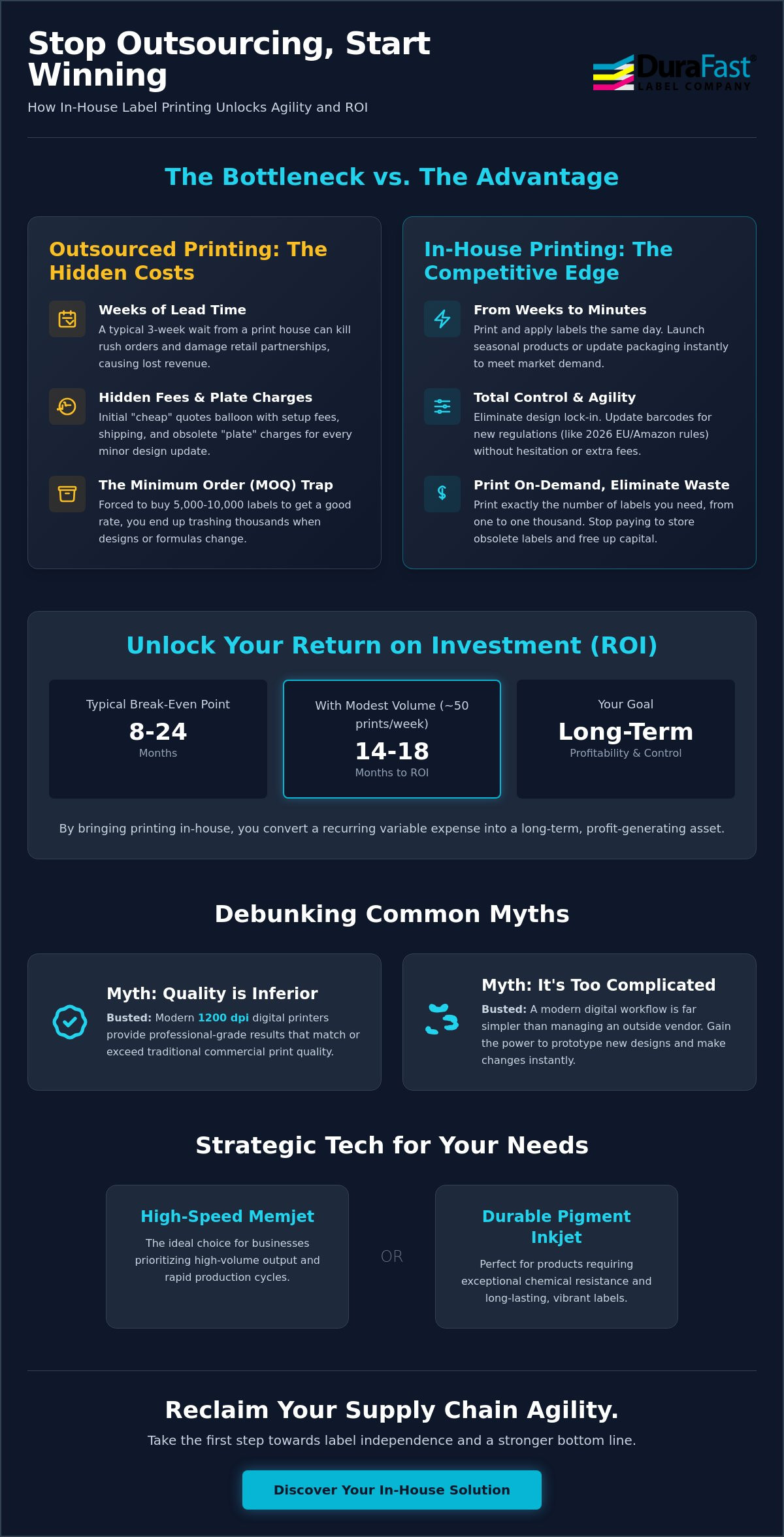
When you receive a quote from a commercial print house, the per-unit cost often looks like a bargain. It's a classic sales tactic. They show you a fraction of a cent per label, but that number only exists in a vacuum. Once you add in the setup fees, plate charges, and shipping costs for heavy rolls, that "cheap" label starts to look very expensive. These hidden fees act as a barrier for businesses that need smaller batches or frequent updates. You aren't just paying for ink and paper; you're paying for the vendor's overhead.
You should stop outsourcing label printing if you find yourself paying for physical "plates" every time you make a minor text change. In a modern digital workflow, those plates are obsolete. Relying on an outside vendor also creates a "design lock-in." You might want to update a nutritional fact or a barcode to meet new 2026 standards, but the cost of re-tooling with a print shop makes you hesitate. This hesitation hurts your brand's accuracy and compliance. It keeps you stuck with old designs simply because you've already paid the "entry fee" for them.
The Minimum Order Quantity (MOQ) Trap
The most common way print shops lower their per-unit price is by demanding high Minimum Order Quantities. They might require you to buy 5,000 or 10,000 labels to get that "ideal" rate. What happens when your product formula changes or you refresh your branding? You end up throwing 2,000 obsolete labels in the trash. This isn't just wasted paper. It's stranded capital and wasted warehouse space. You're effectively paying a premium for the privilege of storing trash.
Advancements in Label printer technology have changed the math. Modern color label printers allow for "on-demand" production. You can print one label or one thousand with the same level of efficiency. You keep your cash in your bank account instead of sitting on a shelf in the form of adhesive rolls you might never use. This flexibility is the foundation of a lean supply chain.
Lead Times and Lost Market Opportunities
Time is a hidden currency in the supply chain. When a major retailer asks for a rush order, a three-week lead time from a print house is a deal-breaker. You can't afford to wait twenty-one days for a delivery of labels before you can ship your product. This delay represents lost revenue and damaged partnerships. In a fast-moving market, being second to the shelf often means being last in the customer's mind.
If you stop outsourcing label printing, your lead time drops from weeks to minutes. You gain the ability to prototype new designs instantly. Want to launch a seasonal "Limited Edition" run for a holiday weekend? You can design, print, and apply those labels on the same afternoon. This agility allows you to respond to market trends faster than competitors who are still waiting for a shipping notification from their print vendor. It turns your labeling process from a bottleneck into a competitive advantage.
Calculating the Real ROI of In-House Label Printing
True Return on Investment (ROI) in the labeling world is the exact moment your operational savings surpass the cost of your hardware. It's a shift from a variable expense to a controlled asset. When you stop outsourcing label printing, you're essentially buying back your margins. You have to look at the total cost of ownership, which includes the printer, ink, and media, rather than just the initial purchase price. This transition allows you to transform a recurring bill into a long-term business advantage.
Finding your break-even volume is the first step toward independence. For many businesses, the return on investment for an in-house label printer can be realized in as little as 8 to 24 months. This timeline depends on your specific volume and the complexity of your designs. Calculating the real ROI requires a framework that accounts for more than just the per-label quote from a vendor. You must include the "soft" costs of waiting and the "hard" costs of shipping. Many brands decide to stop outsourcing label printing once they realize that even a modest volume of 50 prints per week can lead to a break-even point in 14 to 18 months.
Beyond the Printer: Ink and Media Costs
Choosing high-quality inkjet labels is vital for long-term savings. While the printer is the engine, the ink and media are the fuel. Printers like the Epson ColorWorks C6000A utilize high-capacity Epson ink cartridges that significantly lower your running costs compared to smaller desktop units. By matching the right media to your specific ink type, you ensure durability while keeping your cost-per-label low. This synergy prevents ink waste and ensures every print is usable, protecting your investment from the start.
Inventory Obsolescence and Waste Reduction
Inventory Obsolescence is the financial loss incurred from discarding labels that are no longer accurate or usable due to design changes or regulatory updates. On-demand printing completely removes the need for massive label storage. You only print what you need for today's production run. This shift drastically reduces physical waste in your supply chain and protects your bottom line from sudden market shifts. It also offers an environmental benefit by ensuring that your warehouse isn't filled with rolls destined for a landfill.
If you're unsure where your break-even point lies, you can speak with a labeling expert to get a tailored cost analysis for your business.
Debunking the "Too Hard to Use" and Quality Myths
Many businesses hesitate to stop outsourcing label printing because they fear the results will look "homemade." This is an outdated worry. Modern digital label printers now offer 1200 dpi resolution. That's higher than many commercial flexographic presses used for mass production. You get crisp text and vibrant colors that make your products pop on the shelf. The gap between a desktop industrial unit and a massive commercial press has effectively closed for most retail and industrial applications.
Another common myth is that these machines are a maintenance nightmare. That's simply not true today. Modern industrial print heads feature automated self-cleaning cycles. They handle the heavy lifting of upkeep while you focus on your business. It's as simple as running a standard office printer but with professional-grade output. You won't need a dedicated technician on staff to keep your production line moving. These systems are designed for reliability and ease of use in a standard office or warehouse environment.
Professional Design Without a Designer
You don't need a degree in graphic design to produce stunning labels. BarTender Professional Software simplifies the entire process. It uses a drag-and-drop interface that makes complex barcode and label design intuitive. You can even integrate your existing database directly with your printer. This automates data entry and removes the risk of human error. Creating GS1-compliant barcodes becomes a simple, routine task rather than a technical hurdle. It puts the power of a professional design studio right on your desktop.
Quality Comparison: Inkjet vs. Thermal vs. Press
The specific technology you choose should match your product's environment. While traditional thermal transfer is excellent for shipping, color label printers offer a level of vibrancy that older methods can't match. They are perfect for branding and high-end retail packaging. You should use thermal transfer label printers when you need extreme industrial durability for chemical or outdoor environments. For most retail applications, pigment-based inks are the gold standard. They provide superior smudge and fade resistance. This ensures your brand stays looking fresh even after months of handling or exposure to light.
When you stop outsourcing label printing, you gain total control over this quality. You no longer have to accept "good enough" from a third-party vendor. You can tweak colors, adjust fonts, and refine your barcodes until they are perfect. This immediate feedback loop ensures that your packaging always reflects the high quality of the product inside the box.
While bringing labels in-house offers great flexibility, many brands still rely on specialists like Plain Insane Graphix for high-impact promotional marketing materials and professional signage to complete their visual identity.
Strategic Transition: Choosing the Right In-House Technology
Choosing the right machine is the most critical step when you decide to stop outsourcing label printing. You must align your hardware with your specific production environment and weekly label volume. If you print 500 labels a week, your needs differ significantly from a company printing 50,000. Environmental factors like moisture, heat, and UV exposure also dictate which technology will survive on your product. Future-proofing for 2026 means selecting a system that can handle evolving compliance standards, such as the new EU packaging regulations, without a complete hardware overhaul.
You need to consider the trade-off between speed and durability. Some technologies excel at printing thousands of labels in minutes, while others focus on creating prints that can withstand chemical submersion. Identifying your primary goal, whether it's shelf appeal or warehouse tracking, will narrow down your options quickly. This strategic approach ensures your investment pays for itself as fast as possible.
Color Inkjet for Branding and Product Appeal
Color inkjet systems are the primary choice for branding and shelf appeal. The Epson ColorWorks series is a powerhouse for high-durability needs. These machines produce GHS-compliant and chemical labels that resist fading and smudging even in harsh conditions. If your priority is sheer speed and high-volume output, the Afinia L801 is often the better fit. It uses Memjet technology to deliver professional prime labels at incredible speeds. To get the best results from these high-speed units, you need specialized Afinia L701/L801/L901 labels. These are specifically designed to handle rapid ink absorption without bleeding or losing detail.
Thermal Transfer for Logistics and Durability
For warehouse and logistics tasks, an industrial barcode printer is the industry workhorse. These machines are built for constant operation in dusty or high-traffic environments. You must pair them with high-quality thermal ribbons to ensure your shipping labels remain legible throughout the entire transit process. Low-quality ribbons can lead to barcodes that won't scan, causing expensive shipping delays.
You also need to decide between direct thermal and thermal transfer workflows. Direct thermal is excellent for short-term shipping labels because it doesn't require a ribbon. However, the labels are sensitive to heat and light. Thermal transfer is necessary for long-lasting durability. It provides the scratch resistance required for heavy-duty industrial applications. When you stop outsourcing label printing, you gain the freedom to switch between these technologies based on each specific project's requirements.
Matching the technology to your workflow ensures you don't overspend on features you don't need. It also prevents you from underspecifying a machine that can't keep up with your growth. If you are ready to make the switch but aren't sure which class of hardware fits your facility, contact our team for a personalized equipment recommendation today.
The DuraFast Path to Label Independence
Transitioning to in-house production is a strategic move that pays dividends for years. At DuraFast Label Company, we've already done the heavy lifting of vetting hardware so you don't have to. We understand that your focus should be on your product, not on troubleshooting equipment. By acting as a specialized partner, we help you bridge the gap between third-party dependence and total operational freedom. Our goal is to strip away the complexity of industrial supplies and provide a clear, reliable path forward.
When you decide to stop outsourcing label printing, you shouldn't have to navigate the technical landscape alone. We provide a "One-Stop Shop" experience that covers everything from high-speed printers to custom-engineered media. This integrated approach ensures that every component of your labeling system works in perfect harmony. You won't have to worry about whether your ink will bond correctly with your chosen label stock. We've already tested those combinations to ensure professional results every time.
A Curated Selection of Industry Leaders
We focus exclusively on industry leaders like Epson, Afinia, and Zebra because reliability is non-negotiable in a production environment. These brands represent the gold standard of modern printing. They offer the durability and precision required to meet the strict 2026 compliance standards we've discussed. Our North American-based support and supply chains ensure you always have access to the parts and expertise you need. You can dive deeper into the specific technical requirements for your facility in our comprehensive guide on How to Print Your Own Product Labels: A 2026 Guide to In-House Success.
Ensuring Long-Term Success with the Right Supplies
A printer is only as good as the supplies you put into it. Using high-quality Epson inks is essential for maintaining consistent color results and protecting your print heads from premature wear. We help you select the perfect media for your specific application, whether you're labeling frozen food or industrial chemicals. This attention to detail prevents wasted rolls and ensures your brand always looks its best on the shelf.
The choice to stop outsourcing label printing is about more than just saving a few cents per unit. It's about reclaiming your time and taking total control of your supply chain. We provide the expert guidance needed to make this transition smooth and stress-free. We'll help you analyze your current spending and identify the exact hardware that will maximize your return on investment.
Ready to stop overpaying for lead times and minimum orders? Contact us for a custom ROI calculation today and see exactly how much your business can reclaim by bringing your printing in-house.
Take Control of Your Supply Chain Today
The transition from third-party dependence to in-house production is about more than just lower costs. It's about gaining the agility to respond to market shifts and new 2026 regulations without waiting on a vendor's schedule. By eliminating high minimum order quantities and long lead times, you protect your margins and remove the bottleneck of inventory obsolescence. When you stop outsourcing label printing, you turn a recurring expense into a powerful business asset.
DuraFast Label Company is here to ensure your success at every step. As an authorized dealer for Epson, Afinia, and Zebra, we provide the reliable hardware required for professional results. Whether you need the extreme durability of our DuraFast Matte Chemical Labels or high-speed branding solutions, our curated selection meets the highest industry standards. We've provided expert North American support since 2012, helping businesses like yours simplify their labeling workflows with confidence.
Don't let outdated outsourcing models slow your growth. Browse our selection of Color Label Printers and take control of your production today. Your journey toward label independence is just one strategic choice away, and we're ready to help you make it happen.
Frequently Asked Questions
Is it really cheaper to print labels in-house than to outsource?
Yes, printing in-house is often significantly cheaper over time because you eliminate vendor markups, rush fees, and shipping costs. You also avoid the waste tax of throwing away obsolete labels from high minimum orders. Most businesses see a return on their investment within 8 to 24 months. By producing only what you need, you keep your capital in the bank instead of on a warehouse shelf.
How much does an industrial color label printer cost to run?
Running costs depend on your ink consumption and media type, but the cost per label typically ranges from $0.015 to $0.05. High-capacity cartridges in industrial models help keep these expenses low. You only pay for the ink and labels you actually use for your current production run. This predictable cost structure makes it much easier to manage your margins compared to the fluctuating quotes from external print shops.
What kind of maintenance do in-house label printers require?
Modern label printers require very little manual maintenance thanks to automated self-cleaning print heads. You mostly need to keep the paper path clear of dust and replace consumables like ink and maintenance boxes when prompted. These machines are designed for office and warehouse environments, meaning you don't need a specialized technician. Just follow the basic cleaning prompts on the printer screen to keep your production line running smoothly.
Can I print GHS-compliant chemical labels in-house?
Yes, you can produce fully GHS-compliant labels by using pigment-based inkjet printers and certified media. When you stop outsourcing label printing, you gain the ability to print red and black hazard pictograms on demand. This ensures your chemical products meet international safety standards without the need to stock pre-printed rolls for every possible hazard combination. It's a faster and more efficient way to handle complex regulatory requirements.
Do I need special software to design and print my own labels?
You will get the best results using specialized software like BarTender Professional, which simplifies the creation of barcodes and complex layouts. This software allows you to connect your product databases directly to your printer for automated data entry. While many printers come with basic drivers, professional labeling software ensures your designs are accurate and compliant with industry standards. It's an intuitive tool that makes professional design accessible to your team.
What happens if my in-house printer breaks down?
Reliable support is essential, which is why we offer North American-based assistance for all our major brands. Most industrial printers come with manufacturer warranties and the option for extended service plans to minimize downtime. Having a backup printer or a stock of critical spare parts can also protect your production schedule. Our team is available to help you troubleshoot issues quickly, ensuring that any technical hurdle is addressed with minimal impact.
How long does it take to learn how to operate a color label printer?
Most operators can learn the basics of a modern color label printer in less than an afternoon. The user interfaces are designed to be as intuitive as a standard office printer. Loading media and changing ink cartridges are straightforward tasks that don't require technical expertise. With a small amount of training on your chosen design software, your team will be ready to stop outsourcing label printing and produce professional-grade results with confidence.
Can in-house labels handle moisture and cold storage?
Yes, when you use the right combination of pigment ink and synthetic media, in-house labels are incredibly durable. They can withstand moisture, abrasion, and extreme cold storage temperatures without smudging or peeling. This makes them ideal for food packaging, beverage bottles, and industrial outdoor applications. We help you match your specific environmental needs with the correct label stock to ensure your branding remains intact throughout the product's life.